DESIGNING FOR AGENTIC AI: A SKILLS FRAMEWORK

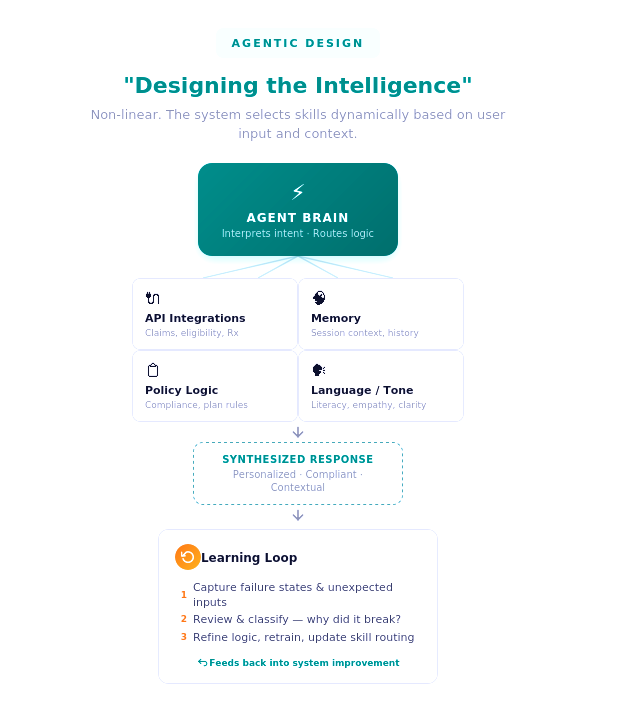
Created a design framework for translating user needs into discrete “skills” within agentic AI systems. The framework helps teams identify which capabilities should become reusable agent skills, how those skills compose into larger user experiences, and how designers can collaborate effectively with product and engineering teams when building AI-driven platforms. It positions “skillification” as a design discipline that connects user goals, system capabilities, and real-world product behavior.

From Designing Containers to Designing Intelligence

Developed a conceptual framework showing how traditional UX design skills translate into the emerging world of agentic AI systems. The model illustrates the shift from designing screen-based interfaces to designing intelligent systems that interpret intent, orchestrate capabilities, and synthesize responses dynamically. It highlights how familiar design practices — such as flows, decision trees, and edge-case handling — evolve into intent mapping, skill orchestration, and conversational QA in AI-driven environments.

PRODUCT, STORY, PURCHASE. REPEAT.

I worked with Target to design a product content strategy to support their expansive brand collaborations, particularly important as many product styles are available only online.

Upon implementation, online sales of these high-value products exceeded sales goals by over 40%, and outperformed on-store sell through rates by over 25%.

The lesson? Great content design bring products to life. It answer questions, affirms trends and kicks hesitations to the curb. Most importantly, good product stories sell.

Work